
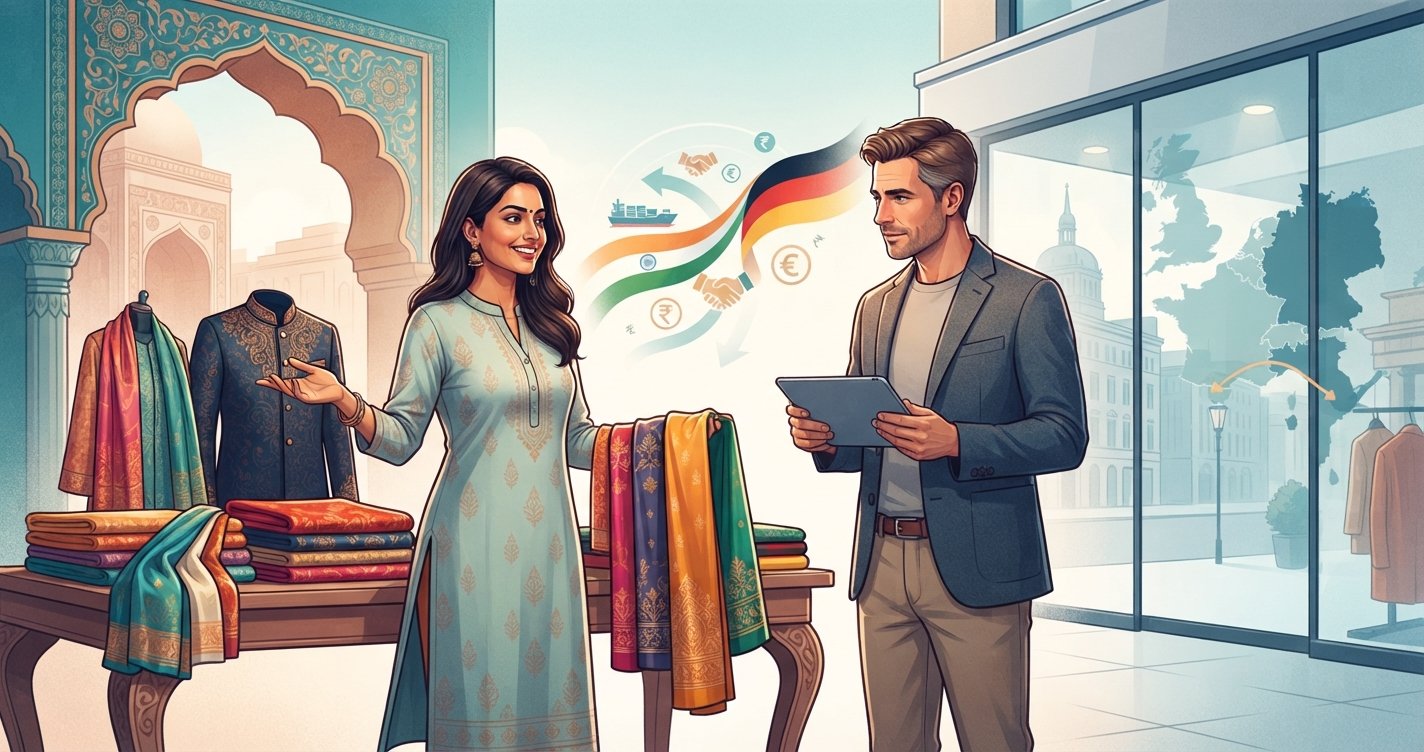
EU-India Trade Talks Advance: Impact on Indian Clothes Germany
India and the European Union are actively advancing towards the signing and implementation of a landmark free-trade agreement, with significant progress reviewed by Indian Commerce Minister Piyush Goyal and EU Trade Commissioner Maroš Šefčovič at the G20 Trade Ministers’ meeting on October 1st. While the deal holds immense potential for reducing import duties on a wide array of Indian goods, including vibrant ethnic wear, Irish retailers should note that tariffs on Indian imports currently remain unchanged as the agreement awaits formal approval and implementation.
Progress on EU-India FTA: What it Means for Indian Clothes Germany and Beyond
The journey towards this comprehensive trade agreement has been extensive, with negotiations successfully concluded on January 27, 2026, after initial talks began in 2007 and were revitalised in 2022. This marks a pivotal moment for trade relations between the two regions, which currently see an annual goods and services exchange exceeding €180 billion.
Key Milestones Towards a New Trade Era
- Negotiations Finalised: India and the EU officially wrapped up negotiations early in 2026, setting the stage for the next phase.
- Current Procedural Stage: The European Commission has sent the agreement to the EU Council for crucial authorisation to sign and conclude the deal, a significant administrative step forward.
- Anticipated Timeline: Reports indicate that the formal signature is expected later in 2026, with implementation potentially commencing in early 2027, pending all necessary approvals from both EU and Indian authorities.
- Tariffs Status Quo: It is crucial for businesses to understand that existing EU import duties on Indian goods, including a diverse range of clothing, remain in place. The agreement will only become effective following its formal signature, European Parliament consent, Council conclusion, and India’s ratification.
Commerce Minister Goyal emphasised the positive momentum, stating that the meeting “reviewed progress towards the signing and entry into force of the India-EU FTA,” underscoring the political will to bring this deal to fruition.
Potential Shifts for Indian Clothing Imports in Ireland
As Ireland adheres to the EU’s common customs tariff, any preferential tariff treatment for Indian garments resulting from this agreement would generally apply across all EU member states, including Ireland. While the specific tariff schedule for beloved items like kurtis, salwar suits, sarees, and lehengas is yet to be fully detailed, the potential implications for Irish sellers are promising:
- Lower Landed Costs: A reduction or elimination of duties on relevant apparel could lead to decreased costs for retailers sourcing authentic pieces directly from India. This could translate to more affordable ethnic wear Ireland for consumers.
- Enhanced Price Flexibility: Savings from reduced tariffs might empower retailers to offer more competitive prices, increase profit margins, or expand their product variety to include even more exquisite designs and textiles, from long kurtis for women Ireland to elegant festive Indian clothing Ireland.
- Streamlined Sourcing: More predictable and favourable customs rules could make direct importing from Indian manufacturers, particularly those creating exquisite embroidered kurtis Ireland or cotton kurtis Ireland, a more attractive and straightforward option than relying solely on European wholesalers.
- Non-Tariff Advantages: Beyond duties, the agreement is expected to address other market-access barriers, fostering a more transparent and predictable environment for trade and investment, ultimately benefiting an online ethnic wear store Ireland.
It's important to remember that these benefits will only materialise once the agreement is formally implemented. For now, there is no immediate commercial advantage to be assumed regarding tariff reductions.
Practical Considerations for Ireland-Based Ethnic Wear Businesses
For businesses like Beethnic.ie, which offers beautiful women's Indian clothing Ireland and accessories like stunning jhumkas, the immediate recommendation is to continue operating under existing EU customs classifications, duty rates, VAT, and compliance requirements. Changing supplier pricing or margin assumptions prematurely is not advisable until the final agreement is officially published, detailing:
- Specific tariff reductions for various apparel categories.
- Clear rules of origin for garments manufactured in India.
- Any staging periods or tariff quotas that might apply.
- Updated textile labelling and conformity standards.
- The precise official entry-into-force date.
The current signal is one of strong political momentum, rather than an immediate change in tariffs. The agreement is moving through the necessary approval procedures, but the operational specifics most relevant to sourcing high-quality Indian ethnic wear and Indian outfits for ladies Ireland are still pending.
For those in Ireland and across the EU looking for where to buy kurtis in Ireland or an authentic desi clothing store Ireland, this news signifies a positive step towards potentially more accessible and diverse Indian fashion. As the EU-India FTA moves closer to ratification, it promises to enrich the cultural tapestry of fashion in Europe, making it easier than ever to buy Indian clothes online Ireland and celebrate ethnicity with fast Indian clothing delivery Ireland. Beethnic.ie remains committed to bringing you the best of Indian heritage, straight from Ireland, so you can embrace vibrant designs with confidence, whether you're styling kurtis for women or selecting what to wear to an Indian wedding in Ireland.