
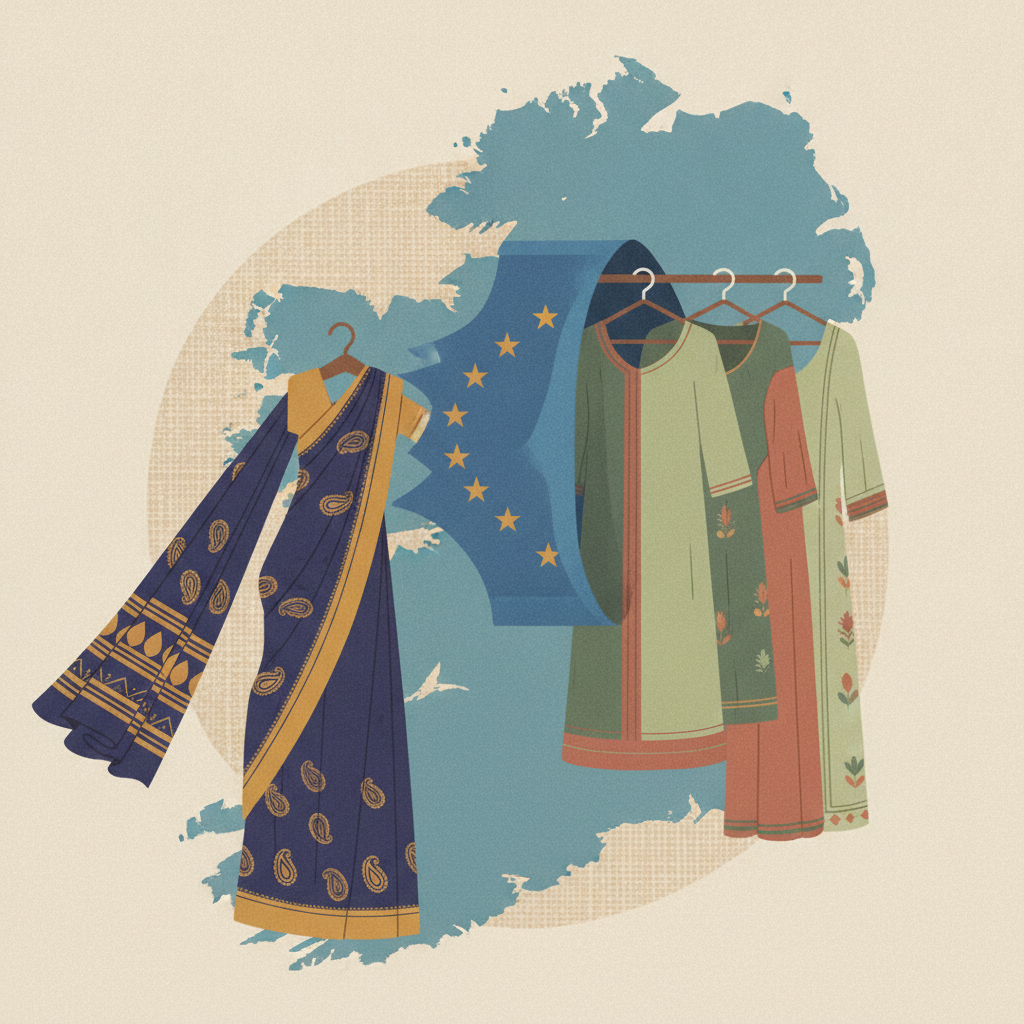
New EU Textile Rules Transform Indian Ethnic Wear Market in Ireland
EU Textile Regulations Usher in New Era for Indian Ethnic Wear in Ireland
Major new EU textile-related regulations are coming into effect, significantly impacting the sourcing, packaging, and labeling of apparel, including the vibrant Indian ethnic wear enjoyed across Ireland. These developments, unfolding over the next few years, aim to tighten compliance on products sold within the EU, ensuring greater transparency and sustainability for consumers and businesses alike. For enthusiasts of exquisite kurta sets, elegant kurtis, and unique statement earrings, these changes mean a future where authenticity is not just about design, but also about verifiable compliance.
The regulations touch on several key areas, from packaging specifics to consumer guarantees and the responsible handling of unsold stock. Businesses that bring beautiful Indian clothes to the Irish market, whether through an online ethnic wear store Ireland or an Indian clothing store Dublin, are preparing for increased scrutiny and enhanced documentation requirements.
Key Regulatory Changes and Their Impact on Ethnic Wear
One of the most immediate changes is the new EU Packaging and Packaging Waste Regulation (PPWR), which will be in full application from 12 August 2026. This regulation demands that packaging for textile products, including those charming boxes holding your new silk kurtis for women or a carefully chosen outfit for an Indian wedding in Ireland, must have verifiable data on its material composition, recyclability, and recycled content. This means importers will need robust evidence from their Indian suppliers to ensure compliance, affecting the overall `indian clothing delivery ireland` process.
Consumer protection is also being strengthened. From 27 September 2026, sellers across the EU, including those offering women's Indian clothing Ireland online, must display a harmonised legal guarantee notice at the point of sale. This includes all online product pages and checkout areas, ensuring that customers buying an anarkali dresses ireland or any other ethnic garment are fully aware of their consumer rights.
Furthermore, a significant stride towards sustainability is the EU ban on destroying unsold clothes and shoes. This prohibition entered application for large companies on 19 July, with medium-sized companies to follow in 2030. This regulation will prompt businesses selling women's festive wear Ireland or other desi clothing store Ireland offerings to review their inventory management, sell-through rates, and returns policies to minimise waste and comply with new disposal responsibilities.
Extended Producer Responsibility (EPR) for textiles is also being phased in under the revised Waste Framework Directive. Member States are expected to transpose this by 17 June 2027, with schemes to be established by 17 April 2028. This will hold producers more accountable for the entire lifecycle of their products, from sourcing to end-of-life, impacting everything from cotton kurtis Ireland to intricate bridal ethnic wear Ireland.
What This Means for Sourcing Authentic Indian Fashion
For businesses like Beethnic.ie, dedicated to bringing authentic Indian fashion to Europe, these regulations underscore the importance of robust partnerships and meticulous documentation. Sourcing from India remains viable and cherished, but importers and buy Indian clothes online Ireland sellers should prepare for increased pressure on labeling, packaging, product traceability, and compliance evidence. The biggest immediate operational risk for products like kurtis and ethnic wear isn't necessarily the garment itself, but rather missing packaging evidence, incomplete fiber/care labeling, or weak records for importer and responsible-person obligations.
As one industry report notes, "From 12 August 2026, no packaging may be placed on the EU market that does not meet the requirements of the PPWR." This highlights the critical need for suppliers to provide full fiber composition, care instructions, origin, and packaging data before shipment. Additionally, confirming who serves as the EU Responsible Person for each product, whether it's vibrant handmade bags or delicate earrings, becomes paramount.
The revised EU textile labeling regulation No. 1007/2011 is expected to undergo revision in Q4 2026. Currently, sewn-in wash labels are required for products with 80% or more textile composition in several EU markets, including Ireland. These labels must include size, composition, care instructions, country of origin, manufacturer information, and EU Responsible Person information. This ensures that when you're looking for where to buy kurtis in Ireland, you're getting fully transparent product information.
Ensuring Continued Access to Vibrant Ethnic Wear
For customers across Ireland seeking where to buy ethnic wear in Ireland, or looking for affordable ethnic wear Ireland, these new regulations ultimately aim to enhance transparency, quality, and sustainability. Businesses are adapting to ensure that the beautiful `indian outfits for ladies ireland` and unique pieces from an indian fashion boutique ireland continue to be available, meeting the highest standards of compliance.
At Beethnic.ie, we are committed to navigating these new regulations seamlessly to continue bringing you the most authentic and exquisite Indian ethnic fashion, shipped fast from Ireland. Our dedication ensures that you can explore and celebrate your ethnicity with confidence, knowing that your chosen kurta sets, statement earrings, and handcrafted handbags meet all EU standards while retaining their unique cultural charm. Embrace culture and vibrant styles with us, secure in the knowledge of our commitment to quality and compliance.